

In Peru, a team of archaeologists has unearthed a significant burial site at a pre-Incan temple that dates back to approximately 3,800 years, illuminating the practices of an ancient water cult.
The site revealed the remains of four individuals – two children, one adolescent, and one adult – strategically positioned facing the majestic Andes mountains, a placement thought to emphasize their cultural reverence for natural landscapes.
Accompanying the remains were ritualistic artifacts such as intricately carved stone pendants and delicate snail shells, indicative of the spiritual significance attributed to water by this culture.
This discovery not only highlights the architectural and societal complexity of early Formative period cultures in the Andean region but also underscores their advanced spiritual life and intricate relationships with natural elements such as water.
The exploration of this site offers profound insights into the intersection of daily life, religious beliefs, and environmental understanding in ancient Andean societies.
Discovery Overview
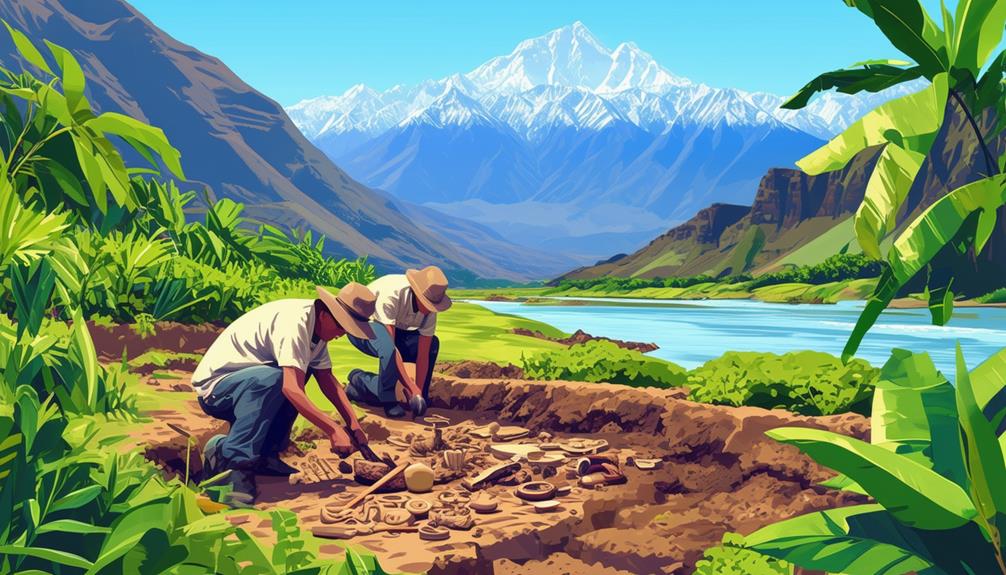
The recent excavation of an ancient burial site within a pre-Incan temple dedicated to a water deity in Peru represents a pivotal archaeological discovery.
Located in a region steeped in historical strata, the site dates back approximately 3,800 years. Archaeological teams uncovered the remains of four individuals—two children, one adolescent, and one adult—each strategically positioned facing the mountains, a direction that likely carries profound cultural significance.
Alongside the human remains, various ritualistic artifacts were discovered, including stone pendants and snail shells, suggesting the ceremonial importance of this location.
This discovery not only offers insights into early religious practices but also has the potential to transform our understanding of historical narratives across South America.
Archaeological Insights
Insights gleaned from the archaeological excavation of the pre-Incan temple's burial site at the ancient location extend beyond mere discovery.
The architectural features, characterized by boulder walls and curved corners, exemplify the Early Formative period, indicative of advanced construction techniques prevalent during that era.
The discovery of pottery, akin to artifacts found in other significant cultural sites such as Gramalote and Huaca Negra, suggests extensive interactions or shared cultural practices among early communities.
The strategic layout of the temple and the deliberate placement of burials in alignment with the surrounding mountains reveal a sophisticated grasp of both geography and spiritual symbolism.
Collectively, these elements not only provide a window into the daily lives and beliefs of the temple's inhabitants but also highlight the complexity of pre-Incan societal structures and religious practices.
Historical Background
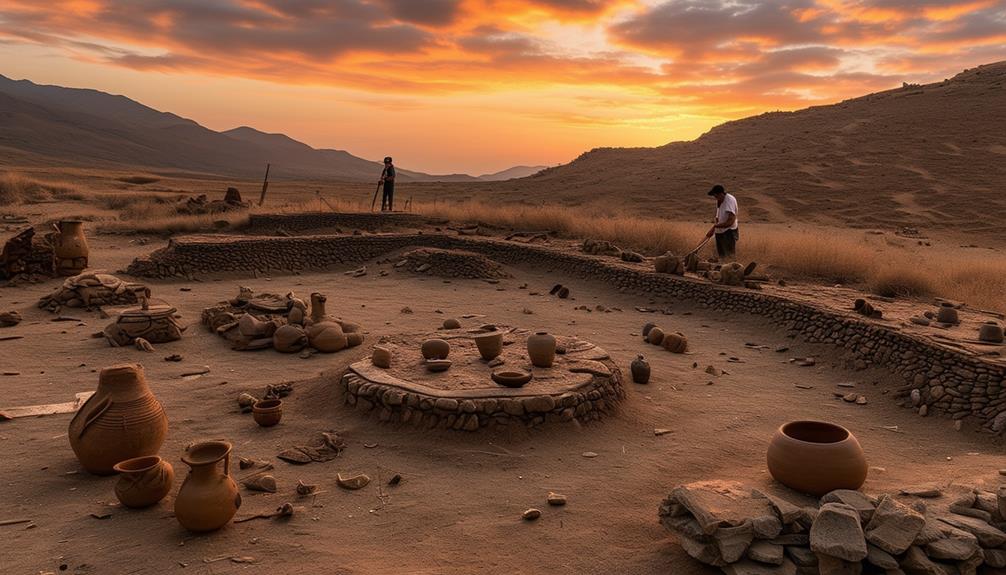
Often, understanding the historical context of an archaeological site provides invaluable insights into the cultural and societal dynamics of the time.
The newly uncovered burial site in Peru, estimated to be approximately 3,800 years old, is strategically positioned within a pre-Incan temple complex dedicated to a water cult. This epoch, around 2000 BC, signifies a transformative period when early Andean civilizations were evolving from nomadic hunter-gatherer groups to more sedentary agricultural societies.
The emergence of institutionalized religious practices at this time reflects an increasing social complexity and the establishment of nascent political structures.
The site's strategic placement and the diverse artifacts unearthed—including ceremonial pottery, agricultural tools, and water management devices—indicate that these ancient populations possessed a sophisticated understanding of their natural surroundings, which was integral to their cultural and religious practices.
Ritual Significance
Exploring the ritual significance of the ancient burial site, believed to be a sacred ground from the pre-Incan era, reveals deep-seated beliefs and practices central to the mystical water cult.
The intentional positioning of the deceased, aimed directly towards the majestic Andes mountains, along with the offerings of intricately carved stone pendants and delicate snail shells, underscores a profound reverence for natural elements, particularly the sacred water sources originating from these lofty highlands.
Such practices likely symbolized a spiritual or mystical connection to the life-giving properties of water, which was essential for survival and growth in the arid landscapes of ancient Peru.
This reverence for water not only highlights its significance as a crucial physical resource but also suggests its integral role in the spiritual lives and afterlife beliefs of the indigenous community, guiding their rituals and cultural heritage.
Preservation Initiatives
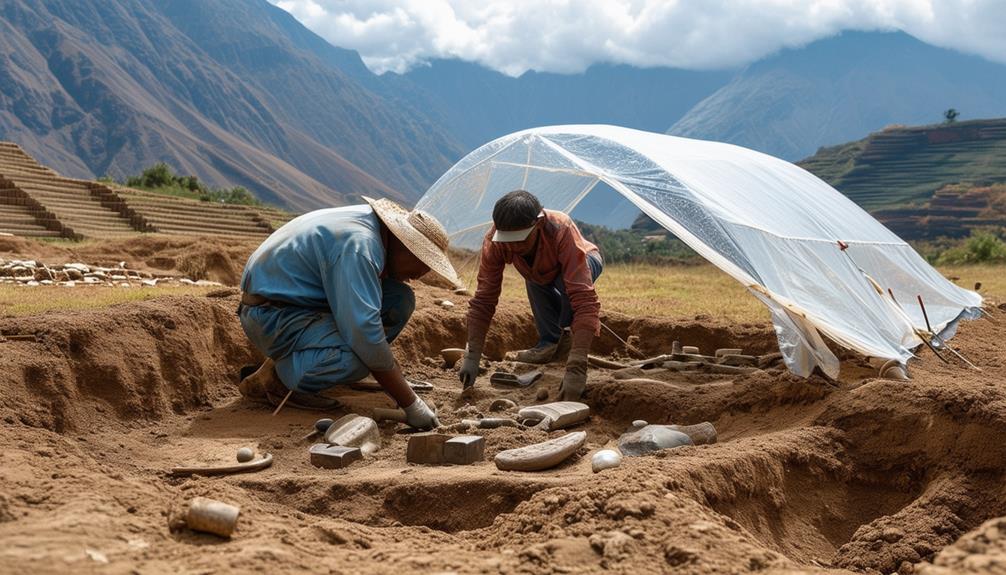
Acknowledging the profound historical significance of the ancient water cult burial site located in Peru, comprehensive initiatives are actively being pursued to safeguard its preservation.
Government bodies, in collaboration with expert archaeological teams, have launched protective strategies to counteract potential damage from environmental elements and unauthorized human activities. This includes the erection of physical barriers designed to regulate visitor access and the establishment of guidelines aimed at promoting sustainable tourism practices that honor the site's historical integrity.
Furthermore, engagement with the indigenous communities is paramount; educational initiatives are being crafted to enhance local awareness regarding the site's cultural importance and to encourage community involvement in its preservation.
Financial resources have been allocated to support continuous research and upkeep, guaranteeing that this priceless archaeological treasure remains protected for future scholars and enthusiasts to explore and value.
Conclusion
The unveiling of this ancient burial site, located within a pre-Incan temple that served a water cult in Peru, sheds light on the intricate spiritual life and cultural rituals of South America's early civilizations. This site, rich with artifacts including intricately carved stone pendants and marine snail shells, along with the specific orientations of the burials, allows scholars to delve into the sophisticated belief systems and hierarchical social structures prevalent in the region. This discovery not only augments our understanding of historical narratives but also highlights the critical need for the preservation of such invaluable cultural heritage for the enlightenment of future generations.
Related articles: Many Baby Foods Fail Nutritional Standards · Pumpkin Spice Latte Season: Dietitians Weigh In · Mike Lynch’s Body Found Amid Yacht Tragedy