

Gravel plays a pivotal role in laying foundations for a concrete slab. The initial question that often arises is whether gravel is an absolute necessity. Truthfully, gravel provides a solid base that sand cannot match. Compacted gravel ensures uniform support, whereas sand lacks load-bearing capacity and can shift under the weight of the slab, causing settling and shifting.
This invaluable attribute aside, gravel has a number of other uses:
Gravel aids in water drainage, reducing the risk of erosion and damage to the concrete and its structure.
Gravel acts as a reinforcement material, much like a rebar cage, increasing the strength and stability of the concrete by providing additional support.
Gravel ensures a level surface for the concrete to settle on, which helps prevent cracks and unevenness in the finish product.
Compacted gravel helps keep the slab in place and prevents movement that can lead to damage.
Gravel can be used to identify weak points during the pour, enabling prompt corrections and ensuring a more solid final product.
In summary, the use of gravel under a concrete slab provides a solid base, aids in drainage, reinforces the concrete, ensures a level surface, helps with compaction, and identifies weak points.
Should You Use Sand or Gravel?

Should You Use Sand or Gravel?
When it comes to choosing a base for your concrete slab, you're faced with a crucial decision: should you opt for sand or gravel?
The answer is rather straightforward. While sand may seem like a suitable choice, it lacks the load-bearing capacity and stability needed for a sturdy concrete slab.
Sand is prone to shifting and moving under exposure to water or extreme weather conditions, which can lead to cracks and settlement issues.
On the other hand, gravel provides excellent drainage, stability, and a solid foundation for the concrete.
As a coarse aggregate material, gravel can be compacted, ensuring a level surface for your slab.
Moreover, gravel's additional strength and stability mean you need less concrete to achieve the same results, making it a more efficient and cost-effective option.
For those who want a durable and long-lasting construction, gravel is the way to go.
How Does the Subgrade Soil Impact
The subgrade soil significantly impacts the performance of a concrete slab over time.
The subgrade, defined as the native soil or compacted fill material beneath the concrete slab, plays a crucial role in providing support and stability to the slab.
Improper subgrade preparation can lead to various issues, such as settlement, heaving, and unevenness in the slab.
A properly prepared subgrade involves various steps, including site evaluation and soil testing, excavation and grading, compaction, soil stabilization, and proper drainage.
Compaction is particularly vital, as it ensures uniform support and prevents settling and shifting of the slab.
Using a gravel base can further enhance stability and prevent concrete cracks, crumbling, and sinking.
The American Concrete Institute (ACI) specifies subgrade and subbase requirements, with the subgrade being the native soil under a slab, and the subbase being a layer of gravel on top of the subgrade.
Both layers together form the soil-support system for the slab.
Ensuring the subgrade is stable and compacted is essential to preventing structural defects and guaranteeing the long-term durability of the concrete slab.
Why Gravel Provides a Foundation

Gravel under concrete provides a stable and level surface that prevents erosion and supports the slab during the pouring process.
You need gravel for several key reasons.
Firstly, it acts as a solid foundation, ensuring the slab stays in place. This is especially important for larger or load-bearing structures, as it helps prevent cracking and sinking.
Secondly, compacted gravel provides drainage, which is crucial in areas with high water tables or poor drainage. Water flowing under the slab can cause significant damage over time, so gravel helps by directing rainwater away from the foundation.
Additionally, gravel reinforces the concrete mix itself, providing strength to the finished product and protecting it from the elements.
With a gravel base, your concrete slab will last longer and remain structurally sound. By incorporating gravel under concrete, you're investing in the durability and longevity of your project.
Gravel Strengthens the Concrete
When you incorporate gravel into your concrete, you add significant strength and stability to the final product. This is because gravel acts as a rebar cage, reinforcing the concrete and preventing cracking or sinking.
When pouring concrete, gravel helps maintain the concrete's shape and ensures it doesn't flow into unwanted areas.
Furthermore, gravel plays a crucial role in controlling joints. By laying gravel before pouring concrete, you create a uniform surface that helps prevent cracking and the subsequent need for costly repairs.
Additionally, gravel allows for effective drainage, which is particularly important in areas with high rainfall. This drainage prevents water from pooling and seeping into the foundation, thereby protecting it from erosion.
Its Role in Drainage and Erosion
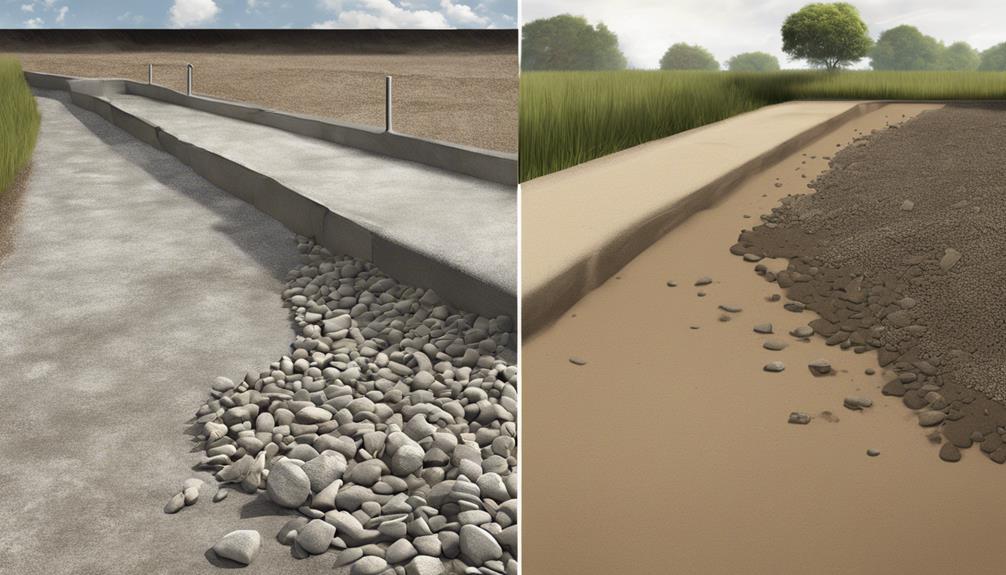
Effective drainage and erosion prevention are crucial for the longevity and stability of your concrete slab, and gravel plays a vital role in achieving these goals.
Water management is essential to avoid pooling around the foundation, which can lead to erosion problems. Gravel provides a capillary break, ensuring that water drains away from the foundation and prevents water from wicking up into the slab.
Without gravel, clay soil can cause moisture to seep into the slab, creating damp spots and potential flooring issues. By installing a layer of gravel underneath your slab, you can prevent water from accumulating around the foundation, thereby prolonging the life of your concrete slab.
Moreover, gravel helps to facilitate drainage by allowing rainwater to flow away from the foundation. This uniform drainage reduces the risk of settlement cracks and ensures a stable foundation for your slab.
Frequently Asked Questions
Do You Have to Put Gravel Before Concrete?
You don't strictly need gravel under concrete, but it's recommended for several purposes. Gravel ensures a stable, compacted surface for the concrete, promotes proper drainage by allowing water to flow away from the slab, and prevents water from wicking up into the slab, which can cause cracking and damp spots.
Can I Pour Concrete Directly on Dirt?
'No, pouring concrete directly on dirt isn't advisable. The soil's instability and lack of drainage, especially in areas with red clay or loose soil, can cause cracks, uneven settling, and other structural issues. It's crucial to prepare the soil by removing organic materials, compacting, and adding a layer of gravel or aggregate to ensure a stable and long-lasting concrete structure. This preparation helps prevent water damage, provides better drainage, and ensures the concrete can support the expected loads.'
Can You Get Concrete Without Gravel?
can indeed be produced without gravel, but be prepared for probable cracks, sinking, and crumbling, plus water damage as the soil shifts and drainage falters—the gravel base provides stability and drainage, making it highly recommended for facilitating a stable concrete slab.
How Much Gravel Do I Need Under a Concrete Slab?
You'll need a minimum of 4-6 inches of well-compacted gravel under your slab to ensure a stable surface. This depth provides adequate support, drainage, and frost protection for your concrete slab.
Conclusion
You've learned that gravel under a concrete slab is essential for stability and durability, especially when compared to sand.
Gravel provides excellent drainage and stability, which ensures a long-lasting structure. Compacted gravel ensures uniform support, prevents settling and shifting, and adds strength to the concrete.
It also facilitates drainage and ensures a stable foundation. For instance, in construction projects involving concrete slabs, gravel helps maintain a consistent surface, which is critical for structures like driveways and walkways.
Additionally, gravel helps mitigate water issues by directing it away from the foundation and preventing erosion.
In summary, yes, you do need gravel under concrete to ensure a long-lasting and sturdy structure.
Related articles: Do You Need Rebar for a 4 Inch Slab? · Is Thicker Concrete Less Likely to Crack? · How Much Does a 30X40 Concrete Slab Cost?