

When deciding whether to install floors before cabinets or vice versa, you face a critical choice that can significantly impact the final result of your kitchen renovation.
The order of installation largely depends on the type of flooring material you're working with.
For example, hardwood floors should be installed first to provide a stable base for kitchen cabinets,
while floating floors, such as laminate and vinyl planks require a different approach to ensure proper expansion and contraction.
As you venture into the world of kitchen design, understanding the nuances of this crucial step can make all the difference in achieving a seamless look.
Cabinets or Floors First?
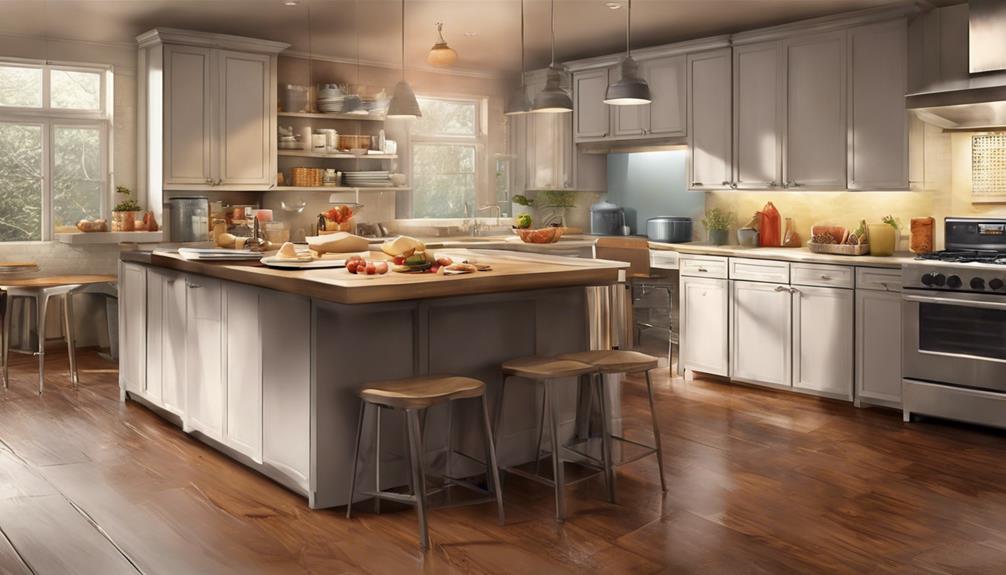
When planning a kitchen remodel, one of the critical decisions you need to make is whether to install your kitchen flooring or cabinets first.
The general consensus is to follow a specific order to ensure proper alignment of cabinets, countertops, and appliances.
For non-floating floors such as hardwood, it's best to install them first. This approach provides a stable base for cabinet placement, eases alignment during installation, and potentially saves on material costs by needing less flooring under cabinets.
Conversely, if you're installing floating floors like laminate or vinyl planks, it's advised to install cabinets first, allowing for expansion and contraction without causing damage to the flooring.
Flooring Material Differences
Hardwood and floating floors have distinct installation requirements, so choosing the right one for your kitchen remodel involves careful consideration of the best order for cabinet and floor placement.
Flooring options can be categorized into two main groups based on their installation requirements.
Nailed-Down Hardwood Floors are traditionally installed before cabinets. This ensures a stable base for the cabinets and allows for easier alignment during installation. Solid hardwood floors offer a more natural look and better longevity, but engineered hardwood can be a more cost-effective option.
On the other hand, Floating Floors, Engineered Hardwood, Laminate, and Luxury Vinyl require cabinets to be installed first. This is because they need expansion space to accommodate movement due to temperature changes. Installing cabinets before these floors prevents damage, buckling, and separation issues.
Knowing the specific requirements for your chosen floor type is key to achieving a successful and long-lasting remodel.
Ensuring Smooth Installation Process

To ensure a smooth and successful installation process, it's crucial to follow the correct sequence of steps.
Starting with the installation of the flooring, including types like hardwood, laminate, and vinyl plank, followed by the cabinets, countertops, and finally appliances and fixtures is vital.
This order is crucial as installing cabinets before the flooring can lead to mistakes and added complexities. For instance, releasing the warranty on hardwood floors could be problematic if cabinets are built on top of them.
When deciding between installing cabinets first or floors, the key consideration is the type of flooring material.
Hardwood floors typically require installation before cabinets, while floating floors like laminate or vinyl work better if the cabinets are installed first. This ensures proper circulation of the flooring material and avoids damage from any adjustment.
If you're handling a kitchen remodel, prioritize flooring first to maintain flexibility for future updates without being constrained by the current cabinet configuration.
Balancing Expansion & Stability
Balancing expansion and stability in wood flooring installations involves a delicate interplay between material selection, installation technique, and room layout considerations.
When deciding whether to install hardwood flooring before or after cabinets, it's crucial to consider the type of flooring and its specific requirements.
For example, nailing down hardwood floors before cabinet installation can provide stability and support for heavy appliances. However, with floating floors like laminate or vinyl planks, it's recommended to install cabinets first and then floor around them to allow for movement and prevent buckling or separation issues.
To ensure a smooth and successful installation, you must also consider the expansion and contraction needs of your flooring. Drilling holes around cabinet bases and using spacers can help ease this process.
Additionally, it's essential to assess the cabinetry and countertops to plan the most efficient and visually appealing layout for your kitchen.
Always consult with professionals if you're unsure about any aspect of the process to ensure your dream kitchen renovation turns out as envisioned.
Crucial Floor Planning Decisions
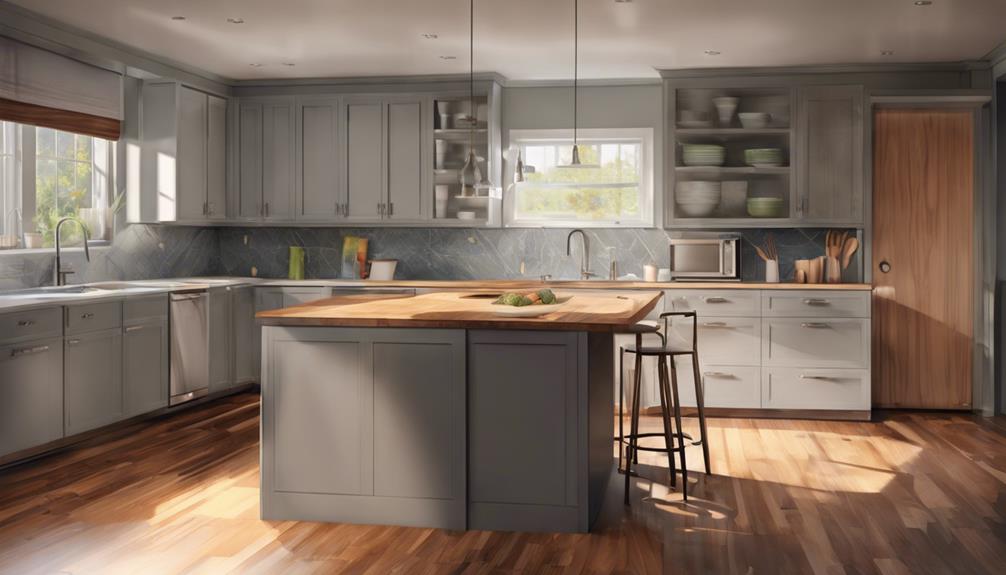
Do You Put Floors in Before Cabinets?
Crucial Floor Planning Decisions.
During the final phases of a kitchen renovation, several crucial floor planning decisions must be made to ensure both functionality and aesthetics.
One of these pivotal choices is determining whether to install flooring before or after the cabinets. Understanding the implications of this decision is vital to achieving the desired look and ensuring that your kitchen renovation turns out flawless.
For hardwood floors, typically installing them first provides better stability. Cabinets can be leveled and aligned more effectively on a solid floor, ensuring that your kitchen renovation turns out flawless.
Floating floors, on the other hand, need space to expand and contract, making it more suitable to install them after the cabinets.
It's also essential to consider the type of flooring you're using and your personal preferences when deciding on the order of installation.
Frequently Asked Questions
Should Flooring Be Laid Under Cabinets?
Yeah, it's generally recommended to install flooring under cabinets. This ensures a seamless look and easier future floor replacements, but it might add labor costs and require support for heavy appliances.
Do Kitchen Cabinets Sit on Bare Flooring or Finished Floor?
When renovating your kitchen, the sequencing of floor and cabinet installation depends on various factors. Do your kitchen cabinets sit on bare flooring or the finished floor? It's a choice that often stalls homeowners.
Cabinets can sit on both, but the decision often hinges on the type of flooring you are using. For non-floating floors such as hardwood or tile, it is generally recommended to install the flooring first, ensuring a uniform foundation for the cabinets. This method also provides flexibility if you plan to change your kitchen layout in the future.
On the other hand, with floating floors like engineered hardwood, laminate, or vinyl plank, it is recommended to install the cabinets before the flooring. This allows room for the flooring to expand and contract without obstruction from the cabinets.
The decision can also be influenced by the thickness of the flooring. Thicker floors can make it harder to place appliances, affecting the installation of base cabinets.
Some experts suggest that for most types of flooring, it is better to install the flooring first. This approach allows the cabinets to be properly leveled and secured to the subfloor, creating a stable base. The flooring can then be fitted around the cabinets, leaving a small gap that can be covered with molding.
Ultimately, the choice between installing flooring or cabinets first depends on your specific kitchen renovation project's needs and goals. Consulting with a professional contractor can help determine the best course of action.
Are Cabinets Installed After Flooring?
When deciding, consider the type of flooring. For nailed hardwood, install flooring before cabinets to ensure a stable base and easier alignment during installation. This approach provides a seamless look and potential cost savings on materials. In contrast, for floating floors like laminate, engineered hardwood, or vinyl planks, install cabinets first to allow for expansion and contraction. This is crucial to avoid buckling or separation issues over time.
Do You Install Floating Floor Before or After Cabinets?
When you're considering a kitchen renovation, it's generally better to install flooring before cabinets, especially with glued or nailed flooring. This approach keeps the flooring free from the weight of the cabinets and ensures flexibility for future changes. However, if you are using floating floors such as laminate, it is better to install them after the cabinets to allow for the necessary expansion and contraction.
Conclusion
You've made the crucial decisions about the order of your kitchen renovation.
Installing a solid hardwood floor requires placing it first, ensuring a stable base for your kitchen cabinets and appliances.
Conversely, when working with floating floors like laminate or vinyl, install kitchen cabinets first to accommodate floor expansion and contraction without damaging the floor.
Proper sequencing will ensure a smooth and successful kitchen remodel.
Related articles: Do Appliances or Countertops Go in First? · How Much Would It Cost to Build a 20X30 Building? · How Many Yards of Concrete Are in a 20X20 Slab?