

When deciding between paving and concreting, cost is a significant factor to weigh.
Concrete, though seemingly more budget-friendly at first glance, is ultimately surpassed by pavers in terms of long-term cost savings and durable performance.
Before making your decision, consider the nuances of each option.
Pavers, with their ease of repair and replacement, and concrete, prone to cracks and difficult repairs, have distinct cost profiles over time.
Let's explore the all-important numbers, the durability differences that impact your wallet, and the aesthetic implications for your outdoor space.
Your informed choice depends on it.
Cost Comparison Between Materials
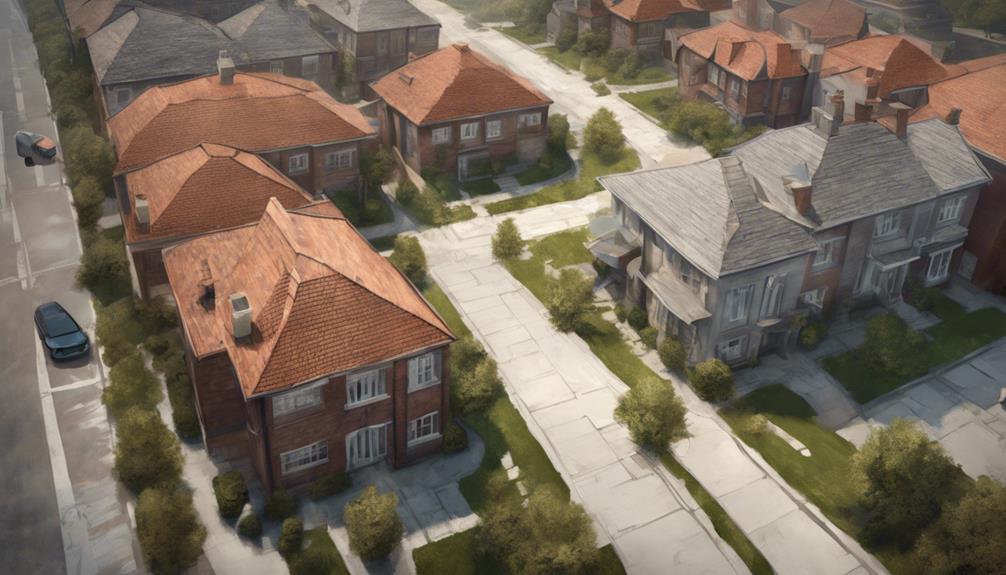
Is It Cheaper to Pave or Concrete? Cost Comparison Between Materials
When comparing the overall costs of pavers and concrete, there are several factors to consider, including the upfront installation costs and long-term maintenance expenses.
First, let's focus on the initial costs. Poured concrete, the most cost-effective option per square foot, ranges from $4 to $15.
On the other hand, concrete pavers are 10-15% more expensive, costing between $10 and $30 per square foot for materials and installation.
Stamped concrete, a more decorative option, can cost the same or even less than pavers in many cases, ranging from $5 to $18 per square foot.
It's essential to note that these initial prices are only part of the equation. Long-term maintenance and repairs should also be considered.
While concrete slabs are generally cheaper upfront, the costs for repairs and replacements can add up over time, potentially making pavers the more cost-effective option in the long run.
Durability and Longevity Differences
When deciding between pavers and concrete, you should consider the durability and longevity differences between these options to make a cost-effective decision.
Pavers, which can last up to 100 years with proper maintenance, are more durable and long-lasting than poured concrete slabs.
Pavers have an average strength four times higher than poured concrete slabs, which are prone to cracking due to ground disturbances, freeze-thaw cycles, and other environmental factors.
Pavers are more flexible and accommodating of fluctuations in the ground, whereas poured concrete slabs may crack under environmental stresses.
Concrete repairs often involve chipping away damaged parts and patching with epoxy or mortar, which can be costly and may not retain the original appearance.
In contrast, pavers can be easily replaced individually without affecting the entire surface.
This flexibility makes pavers less likely to crack due to their interlocking design and aggregate mix.
Furthermore, when repairs are needed, they can be done quickly and easily with hand tools, restoring the pavers to their original condition.
While poured concrete slabs can last as long as pavers if installed correctly and well maintained, pavers are generally more resistant to damage and require lower maintenance costs over their lifespan.
Application Uses and Aesthetics
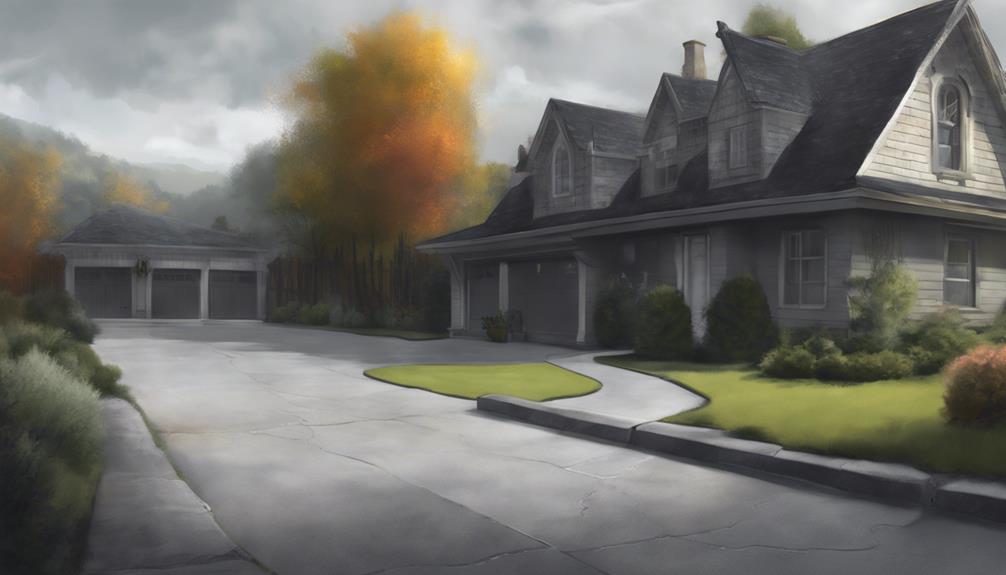
Both concrete pavers and concrete offer various application uses and aesthetic options to suit your specific design preferences and needs, providing a range of choices for your outdoor spaces such as driveways, patios, and walkways.
Whether you envision a sleek, modern patio or a rustic driveway, both materials can bring your vision to life.
Application Uses
Concrete pavers can create captivating driveway designs that elevate curb appeal and provide lasting functionality. They're available in an array of shapes, sizes, colors, and textures, allowing for unparalleled customizability in product selection and application.
Paver patios are constructed from individual paving stones available in various shapes, colors, and textures, offering a wide range of aesthetic options.
Pavers can be used for walkways due to their durability and low maintenance requirements, featuring various design possibilities and textures.
Aesthetics
Pavers can be used to create modern and contemporary designs with a clean, uniform look that complements contemporary architectural styles.
Natural stone pavers, such as rustic slate, can add a timeless, natural beauty to outdoor spaces, seamlessly blending with the environment.
Pavers can be used to create classic and timeless designs with a traditional feel, suitable for various architectural styles.
Costs and Installation
When considering the costs of pavers vs. concrete, it's essential to weigh material costs against installation costs. While pavers may be more expensive in terms of material costs, they offer greater flexibility and aesthetics, which can make them a worthwhile investment. Concrete, on the other hand, has a lower upfront cost, but requires more extensive installation procedures.
For a typical patio or driveway, pavers can cost between $3 and $15 per square foot. Concrete can range from $5 to $12 per square foot.
The choice between pavers and concrete depends on balancing your desired aesthetic with the costs associated with each material. These average costs can vary depending on several factors such as project size and local labor rates.
Cost-Effective Repairs and Maintenance
Concrete pavers' cost-effective longevity and flexibility in maintenance make them a better choice compared to concrete, especially when considering the fees associated with repairs.
If you're between pavers and concrete for your outdoor project, understanding the costs of repairs must be part of your consideration.
While concrete repairs can be costly, with prices ranging from $8 to $500 or more, paver repairs are generally less expensive, from $15 to $125 or more, depending on whether you opt for DIY or professional services.
The significant differences in repair costs come from the nature of the materials themselves.
Pavers are simpler to repair and replace because each piece can be individually removed and replaced.
Concrete, on the other hand, often requires patching or even replacing the entire surface, leading to more extensive and expensive projects.
This flexibility of pavers also makes them more durable and long-lasting.
Properly maintained, paver installations can last for up to 100 years, a significant advantage over concrete in terms of long-term cost-effectiveness.
Value Per Square Foot Analysis
While selecting between concrete and pavers, the cost per square foot plays a significant role in making an informed decision, with the total cost of materials and installation varying significantly between the different options.
Concrete options vary in cost, with:
Basic Concrete Patio: $4 to $15 per square foot
Stamped or Stained Concrete: $5 to $20 per square foot
Pavers also offer different pricing tiers:
Brick Pavers: $8 to $20 per square foot
Natural Stone Pavers: $10 to $50 per square foot
Porcelain Pavers: $3 to $35 per square foot
Average Cost: $10 to $30 per square foot
For a 1,000-Square-Foot Patio, the total cost would be:
Pavers: Up to $10,000
Concrete: Approximately $5,000
This per-square-foot analysis should help you weigh the financial pros and cons based on your unique needs and budgetary constraints.
Frequently Asked Questions
Is It Cheaper to Lay Concrete or Pavers?
While concrete is cheaper initially, pavers offer better value and durability in the long run, making them the more cost-effective option overall. They may cost more upfront, but their low maintenance and flexibility make them more cost-effective 자동차장_mt_id809231)).
Is Concrete More Expensive Than Paving?
No, concrete is generally not more expensive than paving. Initial costs for paving, which range from $10 to $30 per square foot, are higher than concrete's $4 to $15 per square foot.
Is It Cheaper to Use Asphalt or Concrete?
You'll generally save upfront with asphalt at $2 to $5 per square foot, but concrete might be more cost-effective over time given its longer lifespan and lower maintenance needs.
Should I Pave or Concrete My Driveway?
Deciding between paving and concreting your driveway? While the initial cost of pavers might be higher, their durability, easy maintenance, and long-term value make them a wise investment for your home. In addition, pavers withstand four times the weight of concrete slabs, require minimal maintenance with spot replacements, and have a longer life span (50–100 years). They also offer endless design possibilities and enhance curb appeal.
Conclusion
Is it cheaper to pave or concrete for your driveway or patio?
While initial costs suggest concrete is less expensive, ranging from $6 to $10 per square foot compared to pavers costing around $10-$15 per square foot.
However, pavers offer durability and longevity. They may last up to 100 years with proper maintenance, making them a cost-effective solution in the long run.
Additionally, pavers provide more design flexibility and are easier to repair.
Related articles: How Much Does a 30X40 Building With Slab Cost? · How to Market Your Concrete Business? · How to Get Leads for Concrete Business?