
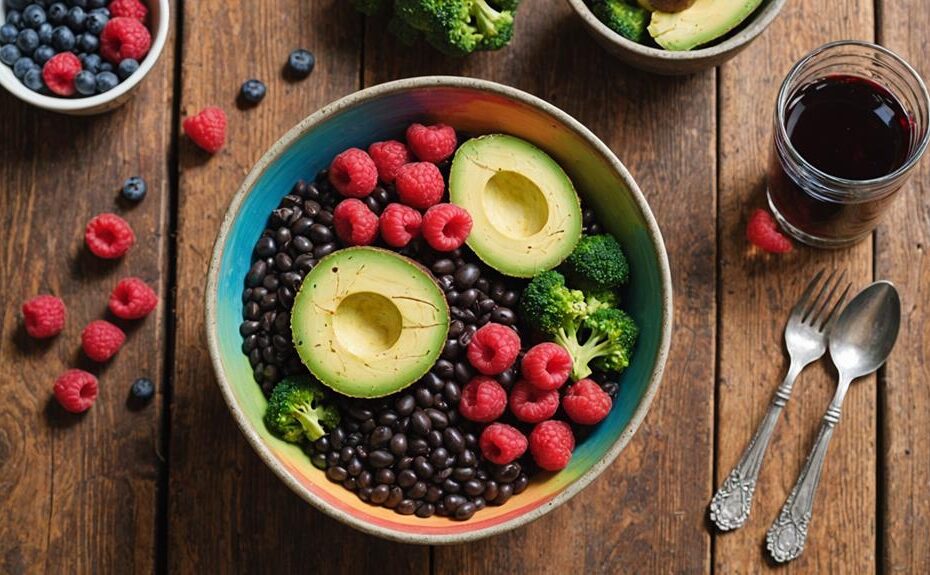
To meet your daily fiber requirements, it is critical to target a balanced intake of 21-38 grams based on your gender, with women requiring 25 grams and men needing 38 grams.
Consuming high-fiber foods such as legumes (beans, lentils), whole grains (brown rice, whole wheat), fruits (apples, berries), vegetables (broccoli, carrots), nuts (almonds, walnuts), and seeds (flaxseed, chia seeds) not only increases your fiber intake but also supplies essential nutrients that bolster overall health.
Gradually increasing your fiber consumption, along with sufficient water intake, can enhance the benefits and reduce potential discomfort.
For individuals who cannot fulfill their fiber needs through diet alone, fiber supplements like psyllium husk present a viable option.
Gaining knowledge about the various types of fiber and their specific sources can prove advantageous.
Fiber's Health Benefits

Fiber, a crucial nutrient, significantly contributes to maintaining overall health by supporting diverse physiological functions.
It enhances digestive wellness by promoting regular bowel movements and preventing constipation. Within the gastrointestinal system, soluble fiber undergoes fermentation into short-chain fatty acids that nourish colonocytes and bolster immune response. This variant of fiber also plays a critical role in lipid management, thereby diminishing the likelihood of cardiovascular diseases.
Conversely, insoluble fiber increases fecal bulk, which expedites its transit through the gastrointestinal tract.
Beyond its gastrointestinal benefits, dietary fiber intake is inversely associated with the incidence of type 2 diabetes, cardiovascular diseases, and specific malignancies such as colorectal cancer. Additionally, fiber aids in weight management by prolonging satiety.
Daily Fiber Recommendations
Recognizing the significance of daily fiber consumption, health experts have established nutritional guidelines to assist the populace.
Adults are advised to ingest between 21 and 38 grams of dietary fiber daily, with specific recommendations of 25 grams for adult females and 38 grams for adult males.
These guidelines are rooted in comprehensive scientific studies demonstrating that sufficient fiber intake not only promotes gastrointestinal health but also plays a pivotal role in averting chronic conditions such as type 2 diabetes and cardiovascular disease.
It is essential for individuals to incrementally increase their fiber consumption to mitigate gastrointestinal discomfort and to maintain adequate hydration to optimize the health advantages of fiber.
Top High-Fiber Foods

Integrating a diverse array of high-fiber foods into one's dietary regime is crucial for sustaining peak health.
Legumes, including black beans and lentils, are particularly abundant in fiber, aiding digestive wellness and supplying vital nutrients.
Cereal grains such as quinoa and oats contribute substantial fiber amounts, which can mitigate the risk of chronic conditions like type 2 diabetes and cardiovascular disease.
Fruits and vegetables, such as raspberries, pears, and artichokes, are not only packed with nutrients but are also superior sources of both soluble and insoluble fiber types.
Incorporating nuts and seeds, including chia seeds and flaxseeds, provides extra fiber and fosters a feeling of fullness, assisting in weight control and enhancing metabolic health.
Focusing on these food categories can significantly boost the overall intake of dietary fiber.
Using Fiber Supplements
While whole foods are often preferred for meeting daily fiber requirements, supplements can play a crucial role for individuals who struggle to consume sufficient fiber through diet alone.
Fiber supplements, such as psyllium husk, provide a concentrated dose of soluble fiber, which can help improve bowel movement regularity and consistency. These supplements are particularly beneficial for those with dietary restrictions or limited access to high-fiber foods.
They are also a practical solution for increasing fiber intake efficiently without significantly altering one's diet.
When integrating fiber supplements into your regimen, it's essential to choose a product that aligns with your health needs and to combine it with adequate hydration to optimize digestive health.
Side Effects and Precautions

As dietary fiber intake escalates, it is imperative to recognize potential side effects and adopt appropriate precautions. A swift augmentation in fiber consumption can instigate gastrointestinal discomforts such as bloating, gas, and diarrhea.
To alleviate these symptoms, it is advisable to gradually integrate fiber-rich foods into your diet and maintain optimal hydration levels. Furthermore, individuals diagnosed with specific health conditions like inflammatory bowel disease (IBD) may need to adjust their fiber intake depending on their tolerance, as certain fiber varieties can intensify symptoms.
Excessive fiber intake can precipitate more critical complications, including bowel obstructions. It is equally vital to diversify fiber sources—both soluble and insoluble—to uphold digestive health and avert negative outcomes.
Fiber for Weight Management
Fiber plays an essential role in weight management by enhancing satiety and reducing appetite. When consumed, fiber-rich foods absorb water and expand in the stomach, leading to a prolonged feeling of fullness. This mechanism can help control overeating, crucial for maintaining a healthy weight.
Additionally, the digestion of fiber-rich foods requires more energy, which can slightly boost metabolism. Soluble fiber, in particular, forms a gel-like substance in the gut that slows down the digestion process, further extending the sensation of fullness.
Fiber and Chronic Disease

Expanding on the role of dietary fiber in weight regulation, its impact is crucial in the prevention and management of various chronic illnesses.
Consuming a diet abundant in fiber is linked with a decreased risk of several major health conditions, including type 2 diabetes, cardiovascular diseases, and colorectal cancer. The underlying mechanisms are diverse: soluble fiber assists in stabilizing glucose levels and lowering lipid concentrations in the bloodstream, whereas insoluble fiber promotes digestive wellness and bowel regularity.
Moreover, fiber's role in enhancing satiety contributes to more effective weight management, which indirectly aids in controlling chronic diseases. Studies indicate that a consistent intake of high fiber not only diminishes inflammation but also improves the diversity of the gut microbiome, thereby strengthening disease resistance and enhancing overall health outcomes.
Enhancing Fiber in Diets
Enhancing dietary fiber is essential for individuals aiming to boost their general wellness and effectively regulate body weight. To augment fiber consumption, initiate by integrating a diversity of fiber-abundant edibles into your nutritional regimen.
Legumes, whole cereals, fruits, vegetables, nuts, and seeds are exemplary sources. Gradually substitute refined cereals with whole grains such as quinoa and barley, and incorporate legumes like beans and lentils into your dishes.
Strive to include a fruit or vegetable at each meal. Additionally, it's crucial to elevate water intake as fiber intake increases to facilitate digestion and avert discomfort.
For those experiencing challenges in achieving their fiber requirements solely through dietary means, consulting a healthcare expert regarding fiber supplements could prove advantageous.
Conclusion
In conclusion, sufficient fiber consumption is crucial for maintaining optimal health, playing a significant role in enhancing digestive wellness, managing cholesterol levels, and stabilizing blood sugar levels. By integrating a diverse array of fiber-rich foods such as fruits, vegetables, whole grains, and legumes, along with dietary supplements, individuals can fulfill their daily fiber needs and may decrease the likelihood of developing chronic conditions such as heart disease and diabetes. It is essential for public health strategies to emphasize educating the public about the myriad benefits of dietary fiber, ensuring widespread knowledge and adoption of fiber-rich eating habits for enduring health advantages.
Related articles: Chefs Unite: The Ultimate Vegetable Revealed · Boost Your Gut Health With Delicious Foods · Essential Anti-Aging Supplements You Can Trust