

In the next decade, you'll find computers aren't just tools you use; they'll become an integrated part of your life. Quantum computing will revolutionize how quickly and efficiently data is processed, enabling groundbreaking advancements in fields like medicine and cybersecurity. You can expect AI and machine learning to enhance your daily experiences by making technology interactions more intuitive and personalized. Plus, with the proliferation of wearable technology and the growing importance of ensuring data privacy, your digital life will be both more accessible and more secure. Discover how this evolving technology landscape could reshape your world.
Quantum Computing Advancements

As we venture into the next decade, quantum computing will revolutionize data processing with unprecedented speed and efficiency. You'll be at the forefront of this transformation, harnessing the power of quantum supremacy to tackle problems that traditional computers can't handle.
Imagine being part of a community that unlocks new potentials in cryptography, drug discovery, and more, thanks to the extraordinary capabilities of superposition applications.
Quantum computing isn't just a technological upgrade; it's a paradigm shift. Each quantum computer uses principles of superposition and entanglement to perform multiple calculations at once, far outpacing even the most advanced classical computers.
This isn't just about speed; it's about solving complex, multifaceted problems with a finesse that feels almost like magic.
You're not just observing this revolution; you're an integral part of it. By understanding and engaging with quantum technologies, you're joining a global community of innovators. Together, you'll explore the boundaries of what's possible, driven by a technology that transcends traditional computing limits.
This is your chance to be at the cutting edge, where the future of technology isn't just used but lived.
Welcome to the quantum era.
AI and Machine Learning Integration
While quantum computing reshapes our approach to complex problems, integrating AI and machine learning is simultaneously transforming how we interact with and benefit from technology. As you navigate through your daily life, from online shopping to streaming movies, you're a part of a community that relies increasingly on intelligent systems designed to predict and enhance your experiences. These technologies aren't just tools; they're becoming your companions in carving out a more efficient, personalized existence.
However, as you embrace this new digital coexistence, there are crucial challenges to address, particularly concerning data privacy and algorithmic bias. You're right to expect that your personal information should be handled with the utmost care, ensuring that your privacy isn't violated. Similarly, the demand for transparency in how decisions are made by AI systems is growing. You deserve to know that the algorithms guiding your interactions are fair and free from biases that could affect you unfairly.
In this journey, you're not alone. There's a collective movement towards refining these technologies to foster an environment where trust and inclusivity are at the forefront. Together, you're steering towards a future where technology not only advances but also aligns closely with the values of its users.
Impact on Healthcare Technology
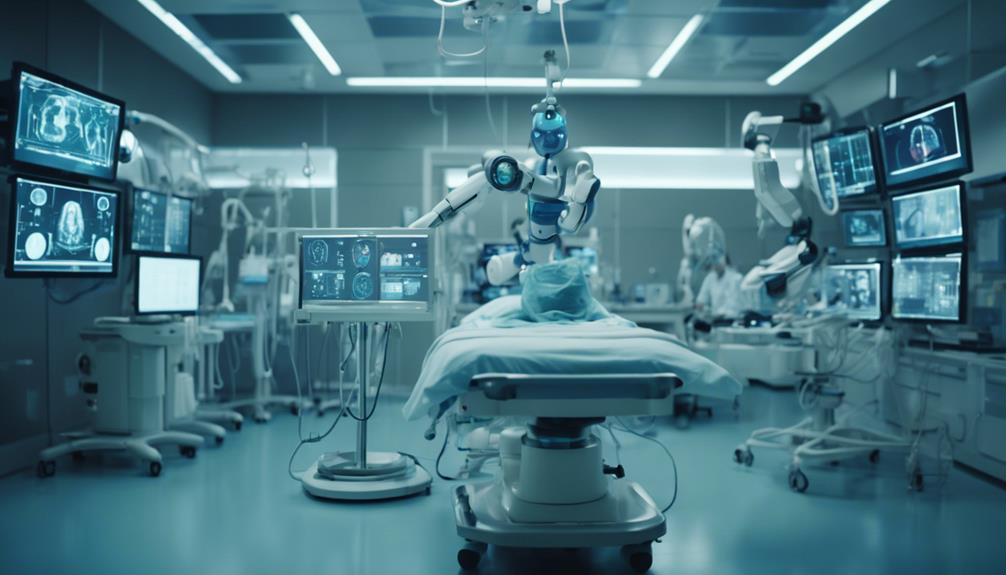
AI advancements are revolutionizing your healthcare experience by enhancing diagnostic accuracy and personalizing treatment plans. With these improvements, you're not just another number in the system; you're receiving care that truly understands and adapts to your unique health needs.
The rise of telemedicine expansion is a game-changer, especially if you're in a remote area or have mobility challenges. You're now able to consult with top specialists without the need to travel, ensuring you receive expert advice from the comfort of your home. This isn't just convenient; it's transforming how you access and engage with healthcare professionals, creating a community that extends beyond local boundaries to wherever you are.
Moreover, patient monitoring innovation is empowering you to take charge of your health proactively. Wearable devices and smart home systems can now monitor your health metrics in real-time, providing your doctors with immediate data to make informed decisions faster than ever before. This tech isn't just about keeping you safe; it's about making you an integral part of your health journey, connected and secure in the knowledge that your health is being monitored continuously.
These tools bring peace of mind, knowing that you're supported and watched over, no matter where you are.
Evolution of Personal Computing
Personal computing is rapidly transforming, offering you increasingly powerful and intuitive tools that seamlessly integrate into your daily life. Imagine starting your day with smart glasses that project your schedule onto a virtual display, keeping you connected without the need to carry multiple devices. This isn't just convenience; it's a deeper integration of technology into your personal sphere, ensuring you're never out of touch with what matters most to you.
Wearable tech is no longer the stuff of sci-fi. It's here, evolving from fitness trackers to devices that manage your workflow, social connections, and health all at once. You're heading into a future where your watch not only tells time but also predicts your needs, perhaps even before you're aware of them yourself.
Moreover, virtual reality (VR) is on the verge of becoming as commonplace as smartphones. You'll be able to meet with colleagues in a fully immersive virtual space, reducing the need for travel and making remote work more engaging. VR will also offer you new ways to unwind, with experiences that transport you to worlds limited only by imagination.
This is a future where personal computing doesn't just assist you; it enhances every aspect of your life.
Cybersecurity in a Connected World

As you embrace increasingly connected technology, securing your digital life becomes crucial. In a world where everything from your fridge to your car is online, data privacy isn't just a preference; it's a necessity.
You're not alone in this digital universe. Together, we must safeguard our personal information from prying eyes.
Network security is more than just a technical issue; it's about creating a safe space where you can freely explore, learn, and connect without fear. It's about ensuring that the networks you rely on are fortified against threats, both big and small.
Whether it's securing your home Wi-Fi or protecting corporate data, you're part of a community that values security as a foundation for trust and interaction.
The Future of Gaming Technology
You'll witness unprecedented advancements in gaming technology over the next decade, transforming how you play, interact, and experience virtual worlds. The gaming industry trends are leaning heavily towards more immersive virtual reality experiences that'll make you feel more connected than ever to the gaming communities and characters you love.
Imagine donning a VR headset and stepping into a game where the environment reacts to your every move and decision in real-time, creating a truly personalized experience.
As these technologies evolve, you'll find yourself not just playing a game, but living within it. The boundaries between the digital and physical worlds will blur, enhancing your sense of presence and belonging in virtual spaces. This isn't just about escapism; it's about deepening connections with fellow gamers globally, sharing experiences that transcend traditional gaming.
Moreover, expect to see AI-driven personalization in games, tailoring challenges, storylines, and interactions to your unique style and preferences. This means games that adapt to you, pushing you and your friends to new heights of engagement and competition.
You're not just a player in the game; you're a creator of your own gaming destiny. Welcome to the future of gaming—where you're truly part of the game.
Workplace Automation and Productivity
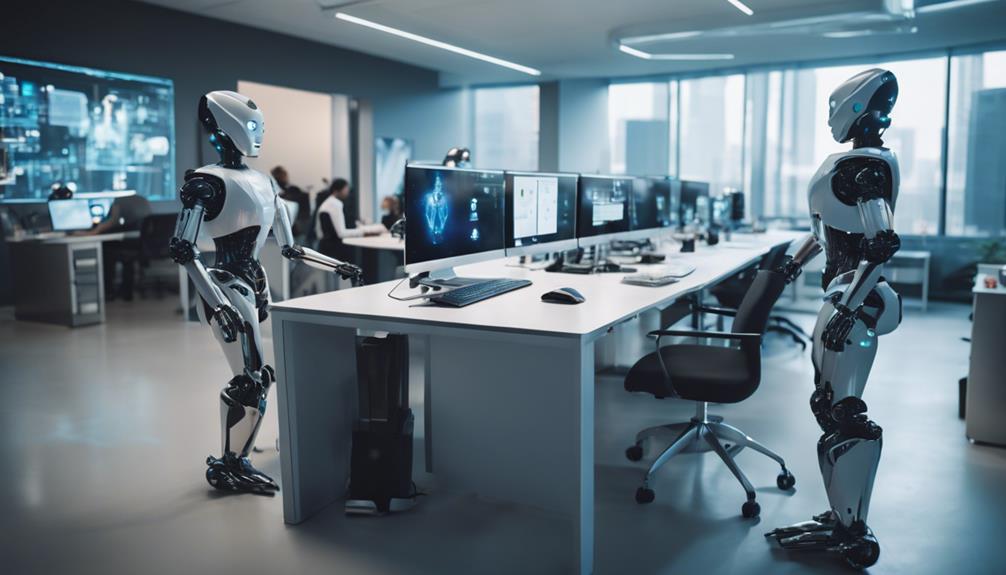
While technology continues to advance, workplace automation is revolutionizing how tasks are performed, significantly boosting productivity across various industries. You've likely noticed how automation isn't just about replacing jobs but enhancing the roles you play at work. It's about joining forces with technology to achieve more together than you could alone.
This synergy between you and intelligent machines leads to remarkable efficiency gains. Imagine robots handling repetitive tasks, freeing you up to focus on creative and strategic aspects where you truly shine. This isn't just a shift; it's an upgrade to your workday, ensuring you're engaged in more meaningful and satisfying work.
However, with these changes come challenges like job displacement. But here's the silver lining: workforce retraining. It's an opportunity for you to learn alongside evolving tech, keeping your skills fresh and relevant. This retraining isn't just a necessity; it's a chance to grow and adapt, making you an invaluable part of the new tech-enhanced workforce.
Moreover, human-robot collaboration isn't a distant dream—it's here. You're now part of a team where every member, whether made of flesh or steel, brings unique strengths. This collaboration isn't just enhancing productivity; it's creating a sense of belonging in a forward-moving world.
Ethical Considerations of AI Advances
Exploring the ethical considerations of AI advances reveals complex challenges and opportunities in balancing technology with human values. As you look ahead, imagine a world where AI systems make decisions that affect your daily life. You're not just a passive observer; you're a part of this evolving digital landscape.
However, the integration of AI into society isn't without its pitfalls. Algorithmic bias and privacy concerns are at the forefront. These aren't just abstract issues; they affect how you're seen and treated by automated systems. For instance, if an algorithm decides your job application or loan eligibility, wouldn't you want to ensure it's fair and unbiased?
Moreover, as AI systems gain autonomy in decision-making, accountability becomes a pressing issue. Who's responsible when an AI makes a mistake? Figuring out how to hold these systems and their creators accountable is crucial for maintaining trust. You have a stake in this.
It's about ensuring that as these technologies develop, they do so in ways that respect and protect your rights and values. This journey isn't just about innovation; it's about ensuring that progress doesn't come at the cost of ethical integrity.
Conclusion
In the next decade, you'll witness revolutionary changes in computing. Quantum computing will leap forward, seamlessly integrating with AI to transform how you interact with technology, from healthcare to gaming.
As personal computing evolves, so will your workplace, becoming more automated and efficient. Yet, with these advancements, you'll also navigate complex ethical dilemmas and heightened cybersecurity risks in an increasingly connected world.
Embrace this future; it's shaping up to be as challenging as it's exciting.
Related articles: What Will Humans Look Like in 3000? · How Will the World Be in 3000? · What Will Happen to the World in 2070?