

When it comes to deciding between pouring concrete or laying pavers for your outdoor project, understanding the cost difference is crucial.
Initially, poured concrete appears more cost-effective, with a range of $4 to $15 per square foot. On the other hand, concrete pavers have a higher upfront cost, ranging from $10 to $30 per square foot.
While concrete is cheaper at first, it can require longer installation times and higher maintenance costs due to its propensity to crack and deteriorate over time. Pavers, despite being more expensive upfront, have a longer lifespan, are low-maintenance, and can be repaired by replacing individual pavers if damaged.
Maintenance needs are a significant factor to consider. Concrete requires extensive repairs for any cracks, and the material is more prone to damage due to freeze-thaw cycles. In contrast, pavers are easy to repair by replacing damaged pavers and are more resistant to damage from ground shifts and freeze-thaw cycles.
Considering both the initial and long-term costs, concrete pavers often offer more value for the money invested, as they are more durable and low-maintenance. Therefore, the extra upfront investment in pavers may be worth it in the long run.
Durability Comparison
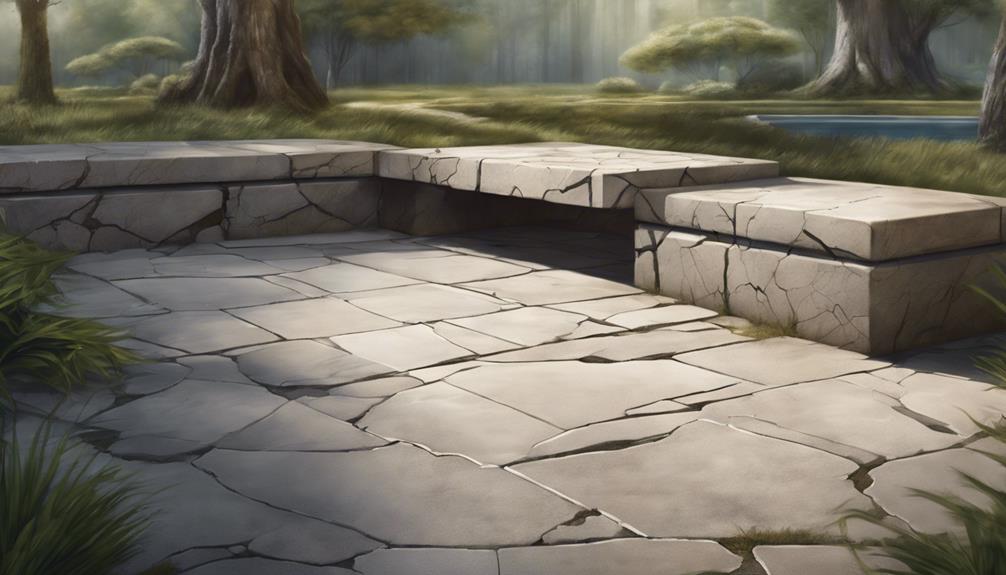
When deciding between concrete and pavers, one of the most crucial factors to analyze is durability—how well each material will hold up to the elements—and the stark differences in their performance can significantly impact your final decision.
Concrete, with its compressive strength of 2,500-3,000 PSI, is moderately durable but prone to cracking over time. Weather conditions like freezing temperatures and shifting ground cause concrete to expand and contract, leading to cracks that can compromise its stability and strength. While it may be durable initially, concrete's long-term resilience is questionable.
In contrast, pavers boast an impressive compressive strength of 8,000 PSI, making them much more durable and resistant to cracking. Their high compressive strength and interlocking mechanism allow for flexibility and movement, allowing them to adapt to extreme temperatures and ground shifting. This adaptability ensures that pavers hold up better in harsh weather conditions and maintain their integrity over time.
Installation Cost Analysis
In terms of installation costs, pouring concrete and laying pavers have distinct price points that should be carefully considered to ensure you get the best value for your money.
The cost of pouring concrete ranges from $4 to $15 per square foot, meaning a 1,000-square-foot patio could cost between $4,000 and $15,000.
On the other hand, laying pavers costs $10 to $30 per square foot, which translates to $10,000 to $30,000 for a similar size patio.
While concrete appears to be the more budget-friendly option, consider the labor costs involved. For concrete, labor adds another $2 to $4 per square foot, whereas paver installation is more labor-intensive and adds $7 to $13 per square foot.
So, for a 1,000-square-foot area, concrete slab installation would cost $6,000 to $19,000, while paver installation would cost $17,000 to $43,000.
When planning your outdoor space, it's essential to weigh these costs against the long-term benefits and disadvantages of each option.
Although concrete may be cheaper upfront, pavers also offer durability and easier maintenance, potentially leading to higher repair and replacement costs for concrete down the line.
Long-Term Maintenance
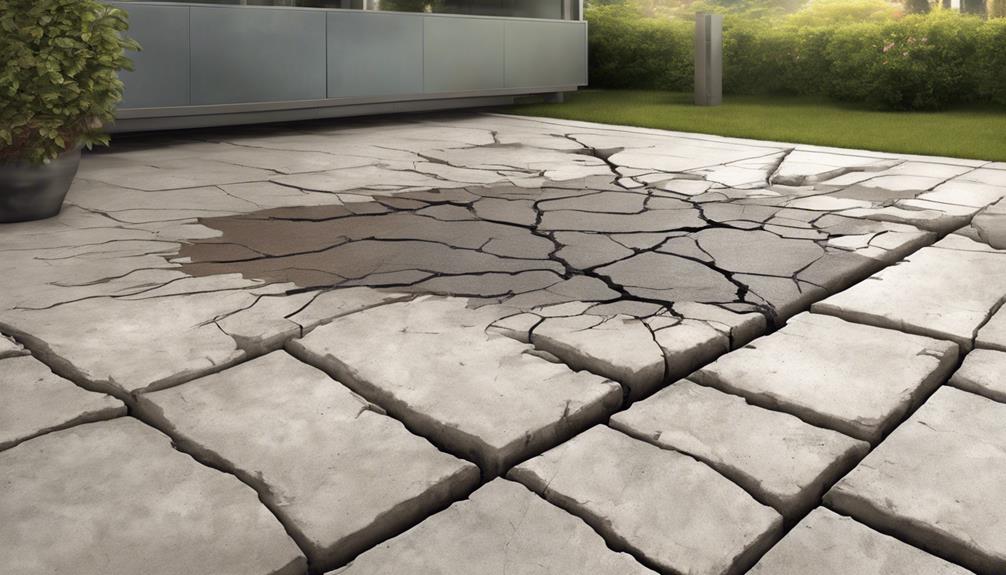
Your pavers and concrete patios demand distinct maintenance regimens, ensuring that your outdoor space stays both visually appealing and functional for years to come.
Unlike concrete, which requires regular patching and resurfacing to prevent cracking, pavers can last up to 100 years with proper care.
While pavers need minimal maintenance, attention is occasionally required for their joints where weeds, moss, and grass may grow. Removal of these unwanted elements is essential to preserve the paver's appearance and functionality.
You can encounter additional costs if these issues are neglected, so regular inspections are crucial.
Professional cleaning and sealing services for pavers can cost between $1.25 and $1.85 per square foot.
In contrast, concrete maintenance involves ongoing costs, with patching and resurfacing each costing between $3 and $7 per square foot.
Over time, these costs can accumulate and outweigh any initial savings. Making pavers a more cost-effective option in the long run.
Drainage Performance
Pavers significantly outperform concrete in terms of drainage, as their sand-filled joints and permeable nature allow them to handle heavy rainfall and direct it back into the ground, reducing puddling and stormwater runoff.
This is vital for areas prone to flooding or with substantial rainfall, as it helps maintain a safer and cleaner environment.
In contrast, concrete absorbs water like a sponge, which can lead to puddling and stormwater runoff if not graded correctly.
This not only causes inconvenience but also leads to more significant water management issues.
Since pavers are designed to drain and displace water, you can rest assured that your outdoor spaces will remain functional and visually appealing, even during heavy rainfall.
Investing in pavers for drainage performance is particularly beneficial for areas with frequent rainfall.
The water permeation and dispersal capabilities of pavers ensure that your outdoor spaces remain safe and well-maintained.
When considering your options for your walkway, driveway, or patio, pavers are a more effective choice for managing water and preventing puddling compared to concrete.
Value and Resale Impact
Generally, homeowners choose to install pavers over concrete because they provide a significantly higher return on investment, making them a valuable addition to a property.
For instance, a travertine driveway paver can significantly improve curb appeal and boost resale value. Professionally installed pavers ensure their longevity and continuous appeal, adding value to your property.
The long-term value of pavers depends on individual preferences, but they're generally considered a valuable asset to a property.
Opting for a paver patio over a concrete patio can result in a significant resale value, and while installation costs for both options may be comparable, pavers offer a higher return on investment.
Furthermore, pavers provide long-term financial benefits by requiring less maintenance and repair compared to concrete.
If you plan to install pavers for your driveway, patio, or walkway, understanding their impact on property value and resale can help you make the most informed decision.
Frequently Asked Questions
Is It Cheaper to Lay Pavers or Concrete?
Deciding between pavers and concrete? Pavers might cost more upfront (10%-15%), but long-term repair and replacement costs make them a more cost-effective choice. Concrete has an initial low cost but higher maintenance costs. Overall, pavers offer significant long-term value and benefits, including better durability and easier repair compared to concrete.
What Lasts Longer, Pavers or Concrete?
You'll find that pavers, including concrete pavers and porcelain pavers, outlast concrete in most cases due to their superior strength and resistance to cracking. Expect pavers to last up to 100 years with proper care, while concrete may need more frequent repairs and maintenance.
What Is the Downside to Concrete Pavers?
When opting for concrete pavers, you should be aware that they can crack easily in cold weather due to expansion and contraction, which compromises their stability and strength, making repairs challenging and costly.
How Much Is 1000 Square Feet of Pavers?
Your 1000 square-foot paver project will cost between $10,000 and $30,000, with paver materials and installation raging from $10 to $30 per square foot.
Conclusion
Is it cheaper to pour concrete or lay pavers?
While concrete might save you money upfront with its lower installation cost, it'll need regular patching and resurfacing.
Adding up to $3 to $7 per square foot in maintenance costs over time.
Pavers, on the other hand, are durable, easy to repair, and need minimal upkeep.
Making them the cost-effective choice in the long run.
Related articles: What Is the Cheapest Way to Get Concrete? · Is It Cheaper to Pave or Concrete? · How Much Does a 30X40 Building With Slab Cost?