

Hara Hachi Bu, which translates to "belly 80 percent full," is a nutritional strategy from the region of Okinawa, Japan, advocating for consumption until one is 80% satiated.
This methodology, which emerged during the Edo period, mandates acute awareness of one's physiological signals over external factors. Adherents are advised to consume food gradually, relish each morsel, and take intermittent pauses during meals to gauge their satiety.
This practice aids in averting excessive eating, boosts metabolic processes, and maintains glucose levels. Notably, the inhabitants of Okinawa, celebrated for their exceptional longevity, extensively adopt this regimen.
Delving into this practice might revolutionize your approach to dietary habits, potentially revealing profound insights into maintaining health and vitality.
Definition and Origins

Hara Hachi Bu, translating to "belly 80 percent full," is a traditional Japanese dietary concept that originated over 300 years ago during the Edo Period.
It was first promoted by the renowned philosopher Ekiken Kaibara in his influential book "Yojokun." This principle advocates eating until one is 80 percent satiated, focusing on internal bodily cues over external influences.
Predominantly adopted in the region of Okinawa, Hara Hachi Bu emphasizes not merely the reduction of food intake but also the enhancement of self-awareness during meals.
Practitioners are encouraged to consume their food slowly, relish each morsel, and consistently evaluate their level of fullness.
This practice is intricately integrated into daily routines, fostering a culture of moderation and equilibrium at meal times, thereby establishing a foundation for a mindful eating lifestyle.
Health Benefits
Over the years, the dietary practice of Hara Hachi Bu, originating from Okinawa, Japan, has been associated with a myriad of health benefits that span beyond mere weight management.
By adhering to the principle of consuming meals until one is only 80% satiated, individuals are less likely to encounter the discomforts of overeating, such as bloating and acid reflux. This habit can also alleviate digestive strain, enhancing the efficiency of the gastrointestinal system in processing nutrients.
Furthermore, it aids in stabilizing glycemic levels, averting the sharp glucose spikes that can trigger hunger cravings and fluctuations in energy levels. Consistently practicing Hara Hachi Bu may also reduce the risk of serious health conditions, including cardiovascular disease, cerebrovascular accidents (strokes), and specific malignancies.
The Okinawan population, renowned for their extended lifespan, frequently adheres to this practice and demonstrates significantly lower occurrences of age-related illnesses.
Mindful Eating Techniques

Mindful eating techniques empower you to distinguish between true physical hunger and emotional eating, which often leads to unnecessary snacking. By focusing on the sensations and flavors of each bite, you'll start to notice when you're actually full. This awareness helps you avoid overeating.
Remember, it's not just about eating slowly; it's about genuinely experiencing your food. Try putting your utensil down between bites as a practical way to pace yourself. Pay attention to your body's signals. Are you eating because you're truly hungry, or because you're bored or stressed? Acknowledging this difference is crucial.
This practice doesn't just reduce calorie intake; it enhances your overall meal experience, making eating a more intentional and enjoyable part of your day.
Practical Implementation Steps
Identifying the distinction between physiological hunger and psychological cravings is a crucial step in effectively applying the Japanese concept of Hara Hachi Bu.
Begin by opting for smaller dishware for your meals; this visually assists in reducing portion sizes and deceives your mind into feeling content with less nourishment.
Before each meal, take a moment to evaluate your hunger on a scale from 1 to 10. Strive to commence eating when your hunger level is at approximately 3 or 4, signifying genuine physiological hunger.
Throughout your meal, consume your food slowly and chew meticulously—target at least 15 chews per morsel. This practice not only promotes better digestion but also grants sufficient time for your stomach to communicate satiety to your brain, thus averting excessive eating.
Keep in mind, the goal is to achieve satisfaction, not to be uncomfortably full.
Monitoring Progress

To effectively monitor your progress with the Hara Hachi Bu dietary approach, it's crucial to maintain a meticulous food journal. In this journal, you'll document the types of food you consume, the quantities, and most critically, your level of satiety.
You should aim to cease eating when you perceive yourself to be approximately 80% full. But how can you accurately assess that 80%? It involves more than just the volume of food; it encompasses your sense of satisfaction and physical comfort as well.
During each meal, evaluate your fullness by using a numerical scale ranging from 1 to 10, where 10 denotes feeling extremely full. This method aids in heightening your awareness of your body's hunger and fullness cues, steering clear of the pitfalls of mindless eating.
As you continue this practice, you'll begin to discern patterns that can more effectively shape your dietary behaviors.
Adjusting the Practice
Refine your strategy with Hara Hachi Bu as you deepen your sensitivity to your body's hunger signals and satiety indicators. This method is all about enhancing your dietary routines using insights from personal experiences and physical responses.
If you consistently experience hunger post-meal, consider modifying both the quality and quantity of your intake, while adhering to the 80 percent satiety principle. On the flip side, if you find yourself excessively full, reduce your portions slightly.
It's vital to heed and act accordingly to your physiological cues. Remember, this method isn't governed by rigid metrics but aims at cultivating a long-term, intuitive eating framework.
Maintaining a dietary journal can be instrumental in decoding your physiological demands and fine-tuning your eating strategies. This tailored approach is key to achieving dietary equilibrium and wellness.
Cultural Insights and Impact
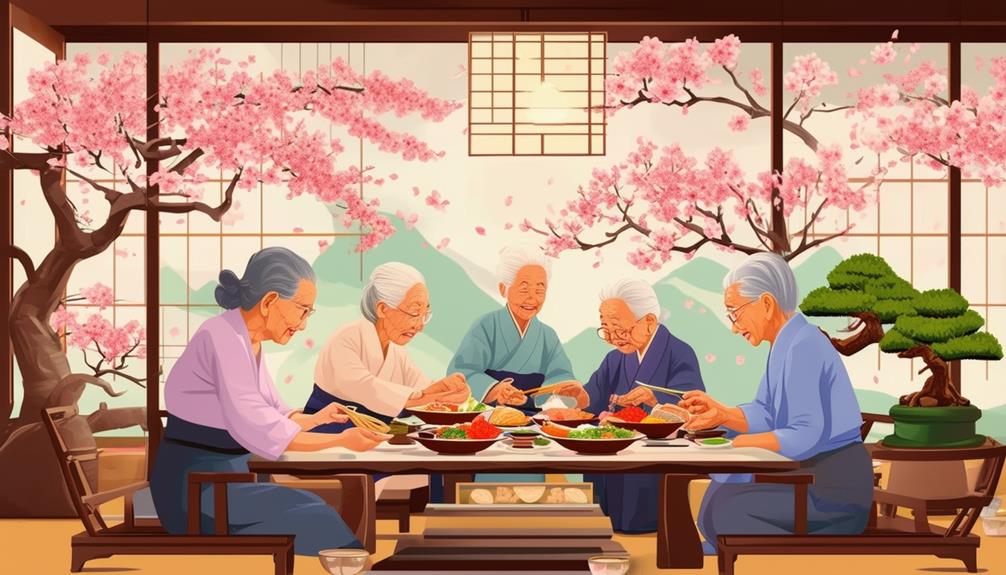
While Hara Hachi Bu, a dietary philosophy with deep roots in Okinawa's cultural heritage, has resonated globally, influencing modern dietary practices across continents.
You might find it intriguing that what started as a regional health custom in the Japanese archipelago has permeated international borders, inspiring a global audience to rethink their dietary habits.
This philosophy isn't merely about reducing calorie intake; it emphasizes cultivating a respectful relationship with one's body. By adopting this practice, individuals aren't only embracing a significant aspect of Okinawan culture but also joining a broader movement towards sustainable health.
Restaurants and wellness programs across North America, Europe, and Asia now promote this concept, proving that mindful eating transcends cultural and geographical boundaries.
It's a testament to how local traditions from a small island can inspire a universal impact on global health practices.
Conclusion
Adopting the principle of Hara Hachi Bu transcends mere calorie reduction; it involves attuning to your body's signals and savoring each morsel. By integrating this age-old wisdom, you'll not only streamline your weight management but also enhance your overall wellness. Initiate this practice gradually, monitoring your satiety levels and making adjustments as necessary. Consider this a path of self-exploration and conscious existence. Allow Hara Hachi Bu to cultivate a more harmonious and healthful connection with food in your daily life.
Related articles: Keto Diet Under Fire: Safety Concerns Arise · Keto Diet: A Risk to Your Cholesterol · Are You Missing Out on Fiber